Trauma Awareness: How Our Experiences Can Shape the Body, Mind, and Overall Health
Trauma does not always look like a visible crisis. It may appear as chronic tension, persistent pain, digestive symptoms, disrupted sleep, anxiety, emotional numbness, difficulty trusting, or a nervous system that remains on alert long after a threatening experience has passed.
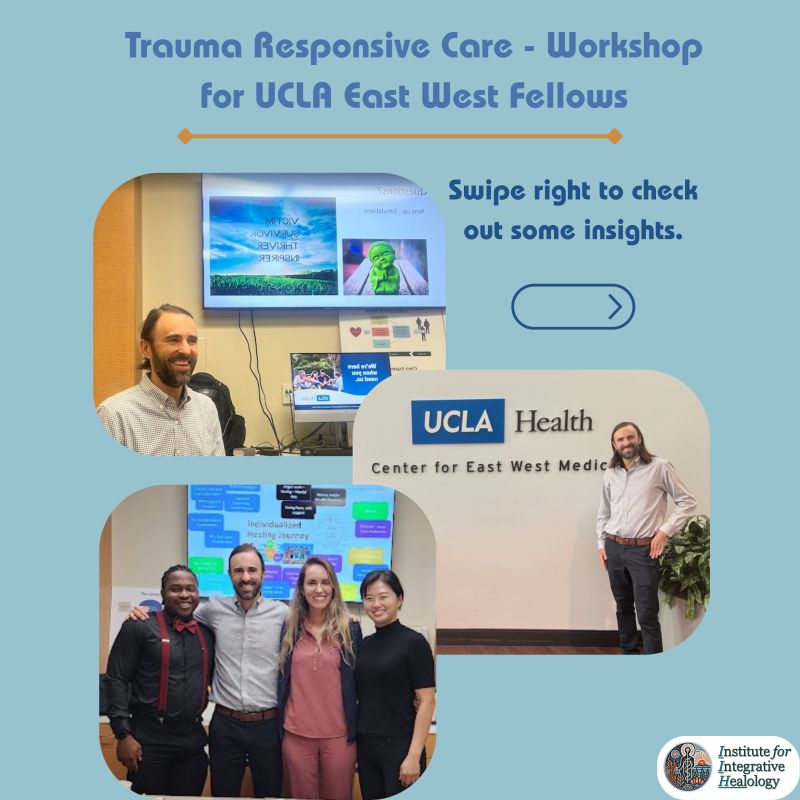
At the Institute for Integrative Healology, we recently had the privilege of leading a Trauma-Aware Care workshop for fellows at the UCLA Center for East-West Medicine. During the workshop, we explored how trauma and chronic stress can influence physical, emotional, relational, social, and spiritual well-being—and how healthcare can become safer, more collaborative, and more supportive of healing.
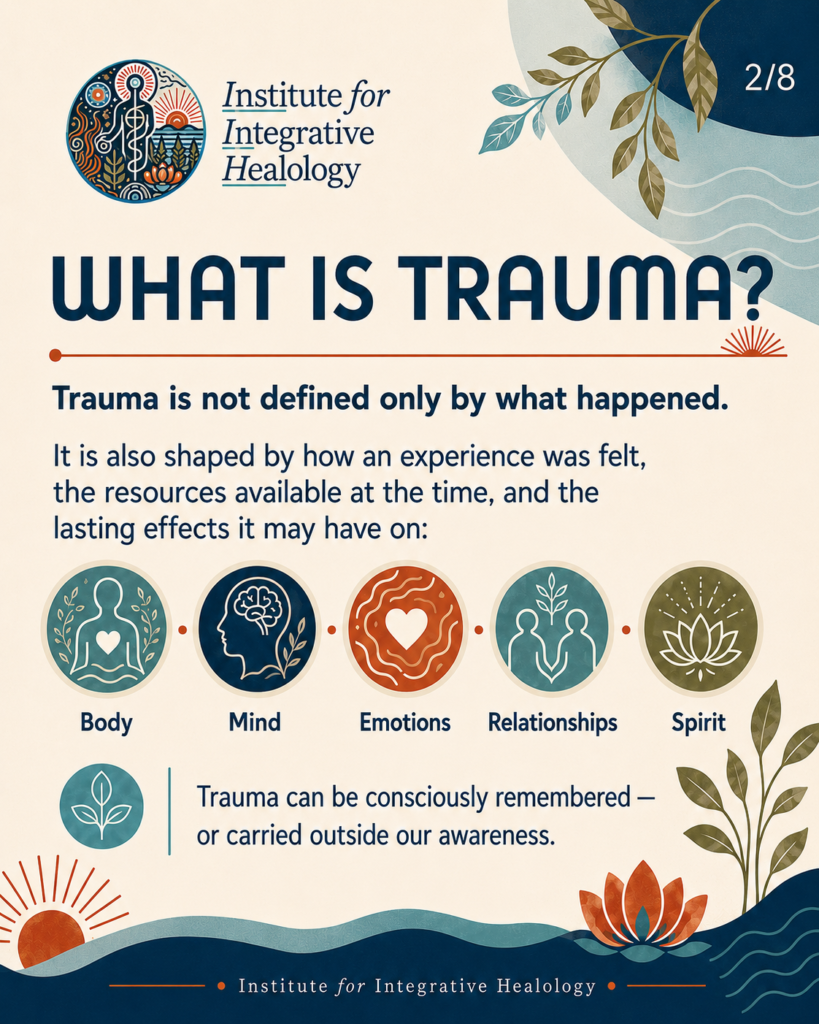
What Is Trauma?
Trauma is not defined only by what happened.
It is also shaped by how an experience was perceived and felt, the resources and support available at the time, and the lasting effects it may have on a person’s functioning and well-being.
Traumatic experiences may be consciously remembered, but they can also be carried outside our immediate awareness. Someone may not always connect a current symptom, reaction, or behavioral pattern with an earlier experience.
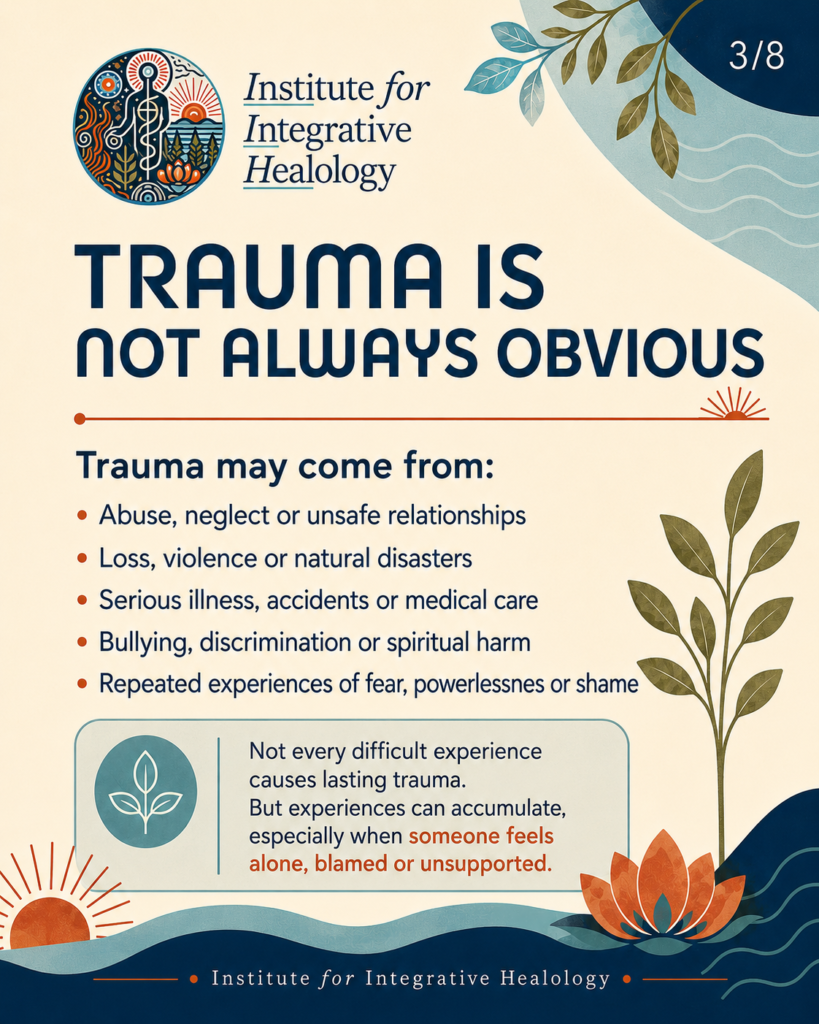
Trauma may arise from experiences such as:
Abuse, neglect, or unsafe relationships
Serious illness, accidents, or medical care
Loss, violence, or natural disasters
Bullying, discrimination, or spiritual harm
Repeated experiences of fear, powerlessness, or shame
Feeling alone, blamed, dismissed, or unsupported during a difficult experience
Not every challenging experience causes lasting trauma. However, experiences can accumulate, particularly when they occur repeatedly or when a person does not have sufficient safety, support, choice, or connection.
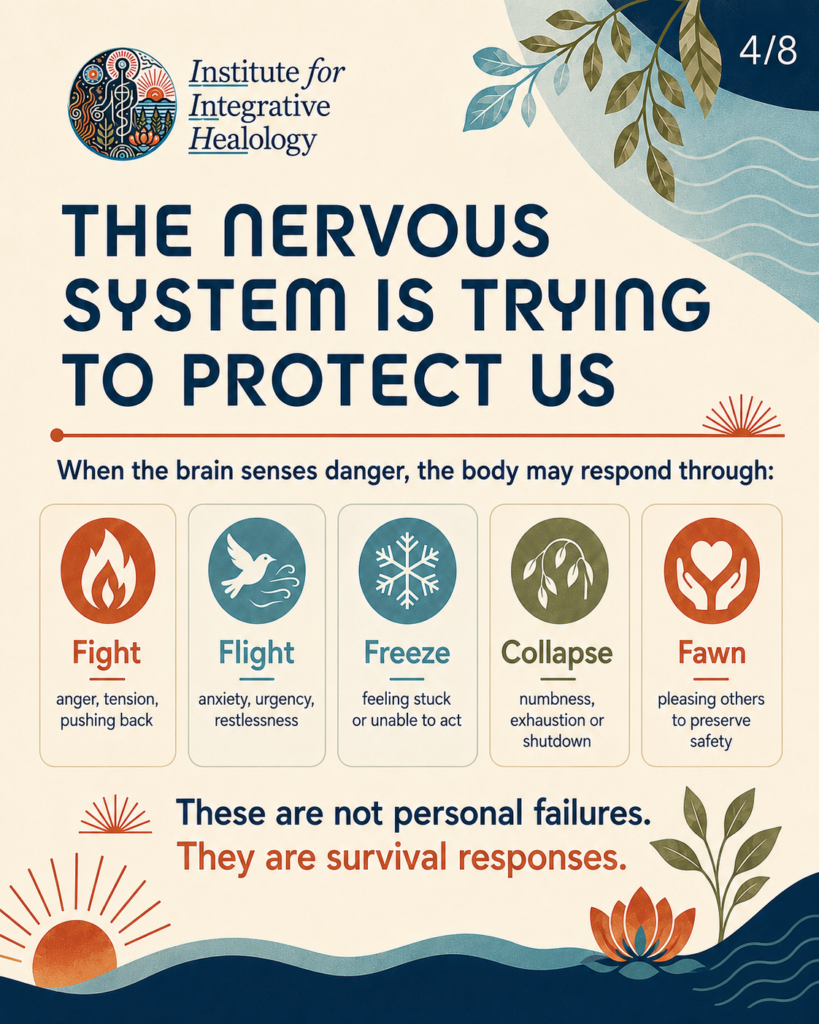
The Nervous System Is Trying to Protect Us
When the brain detects danger—whether the threat is immediate, remembered, or unconsciously perceived—the nervous system may activate a survival response.
These responses can include:
Fight: anger, irritability, muscular tension, or an impulse to resist.
Flight: anxiety, urgency, restlessness, worry, or a need to escape.
Freeze: feeling stuck, overwhelmed, indecisive, or unable to respond.
Collapse: numbness, exhaustion, disconnection, or shutdown.
Fawn: prioritizing the needs of others, avoiding conflict, or trying to please others to preserve safety.
These reactions are not personal failures. They are protective responses that developed to help the body survive or adapt to perceived danger.
A response that was helpful during an earlier experience may continue long after the original threat has ended. This can leave a person feeling as though their body is reacting more strongly—or less visibly—than the present situation seems to require.
How Trauma and Chronic Stress May Appear in the Body
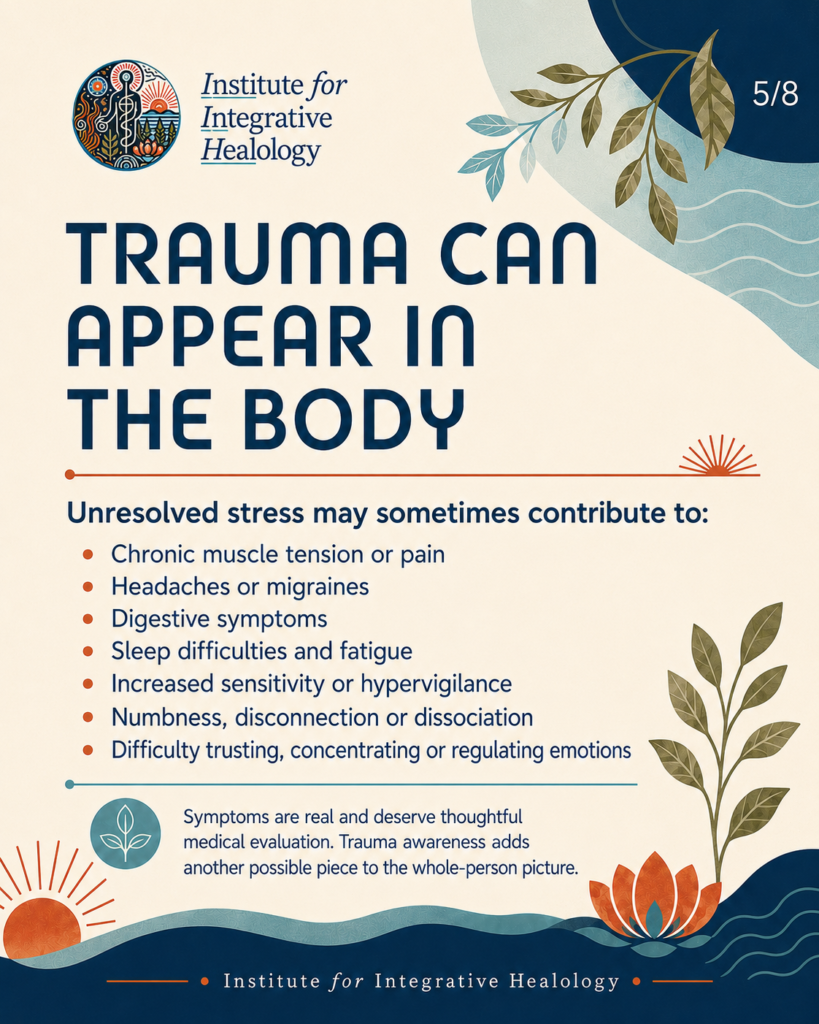
Trauma is not only psychological. Stress responses involve the brain, autonomic nervous system, endocrine system, immune system, muscles, digestion, sleep, and other aspects of physiology.
Unresolved or chronic stress may sometimes contribute to symptoms such as:
Chronic muscle tension or pain
Headaches or migraines
Digestive symptoms
Sleep difficulties and fatigue
Increased sensitivity or hypervigilance
Anxiety, irritability, or mood changes
Numbness, disconnection, or dissociation
Difficulty concentrating or making decisions
Difficulty trusting others or feeling safe in relationships
These symptoms are real and deserve thoughtful medical evaluation. Trauma awareness does not mean assuming that every symptom is caused by trauma or dismissing physical symptoms as “all in someone’s head.”
Instead, it adds another possible piece to the whole-person picture.
An integrative evaluation considers how biology, medical conditions, emotions, past experiences, relationships, lifestyle, environment, and meaning may be interacting.
What Is Trauma-Informed Care?
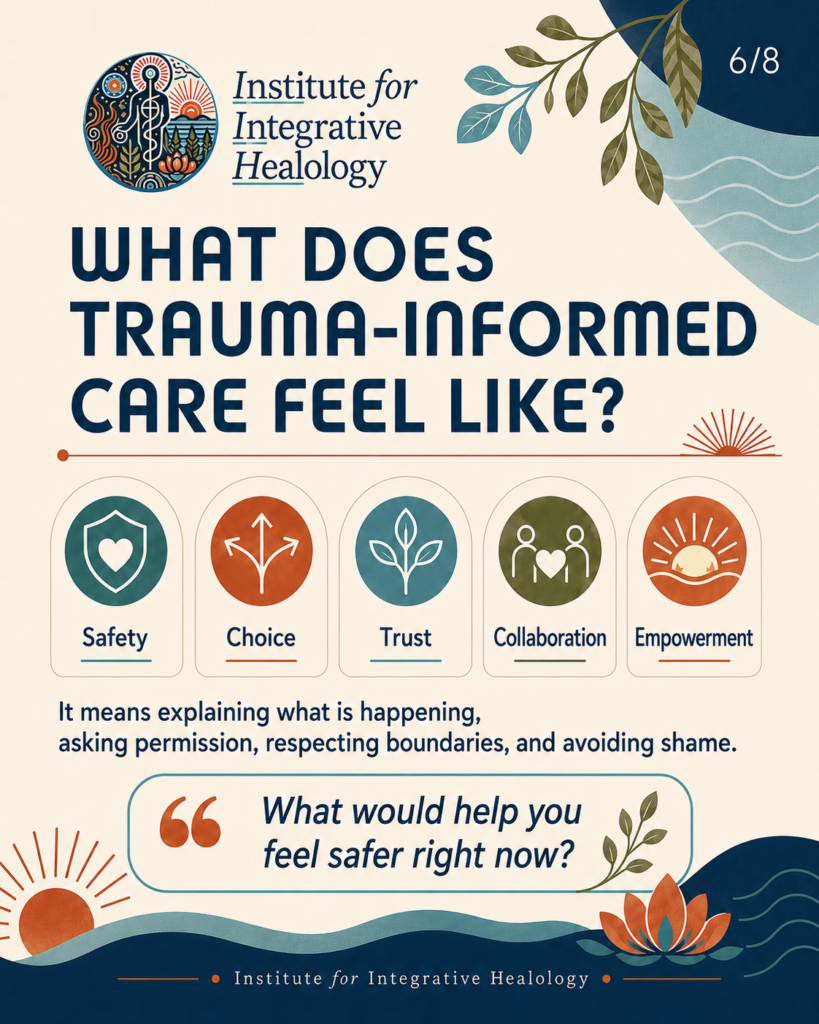
Trauma-informed care does not require every patient to discuss their personal history. It is an approach to care that recognizes how common trauma is and seeks to create conditions that reduce the possibility of shame, powerlessness, or retraumatization.
Core principles include:
Safety
A person’s physical and emotional safety is prioritized. The environment, language, pace, and manner of care all matter.
Choice
Whenever possible, patients are given options and invited to participate actively in decisions about their care.
Trust
Practitioners communicate clearly, explain what is happening, and follow through consistently.
Collaboration
Care is developed with the patient rather than simply delivered to them.
Empowerment
The patient’s strengths, autonomy, intuition, and capacity for healing are respected.
In practice, trauma-informed care may include explaining a procedure before beginning, asking permission, checking in as care progresses, respecting boundaries, avoiding shaming language, and allowing additional time when someone feels overwhelmed.
A simple but meaningful question can be:
What would help you feel safer right now?
Healing Is Individual
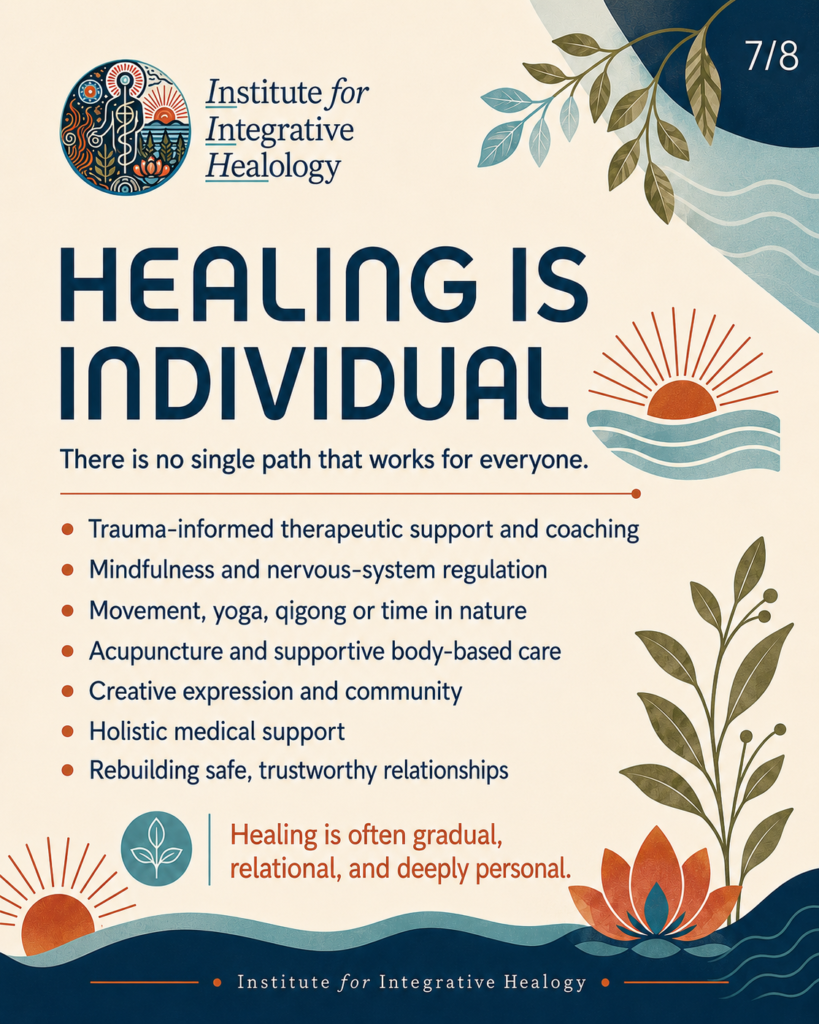
There is no single pathway that works for everyone. Healing often involves a personalized combination of approaches that support the body, mind, relationships, and sense of meaning.
Depending on the person’s needs, preferences, readiness, and medical circumstances, healing may include:
Trauma-informed therapeutic support and coaching
Mindfulness and nervous-system regulation
Movement, yoga, qigong, or time in nature
Acupuncture and supportive body-based care
Creative expression, spirituality, and community
Holistic medical support
Psychedelic-assisted therapy when clinically appropriate, carefully screened, and provided within a safe and supportive therapeutic setting
Restoring a sense of choice and personal agency
Rebuilding safe, trustworthy relationships
For some people, learning how trauma affects the nervous system can reduce shame and help make sense of their symptoms. Others may benefit most from psychotherapy, body-based practices, medication, spiritual or creative exploration, supportive relationships, or carefully facilitated psychedelic-assisted therapy. Many people find that healing emerges through a thoughtful combination of these approaches rather than through any single intervention.
The most appropriate path depends on the individual’s health, history, culture, support system, resources, preferences, and current stage of healing. Healing is often gradual, relational, and deeply personal. It does not necessarily mean forgetting what happened or never feeling activated again. It may mean developing a greater capacity to return to safety, remain present, understand one’s responses, experience connection, and move through life with more flexibility and choice.
You Are More Than What Happened to You
Trauma can influence the body and mind, but it does not define the whole person.
Symptoms that developed as protective adaptations can be met with curiosity rather than shame. With appropriate support, it is possible to build greater awareness, regulation, resilience, trust, and connection.
At the Institute for Integrative Healology, our trauma-aware approach considers the whole person—including physical health, emotional well-being, lived experience, relationships, lifestyle, environment, and meaning.